HEPA Filter vs Carbon Filter: What’s the Difference and Which One Do You Need?
HEPA Filter vs Carbon Filter: What’s the Difference?
Air filtration systems have become essential for improving indoor air quality in homes, hospitals, laboratories, offices, and industrial facilities. Among the most commonly used filtration technologies are HEPA filters and activated carbon filters. Although both are designed to improve air quality, they work in completely different ways and target different types of pollutants.
Understanding the difference between HEPA filters and carbon filters is important when selecting the right air purification solution for your environment.
To explore professional HEPA filtration solutions in detail, visit:
https://safeairfiltre.com/en/hepa-filters
What Is a HEPA Filter?
HEPA stands for “High Efficiency Particulate Air.” These filters are designed to capture microscopic airborne particles with extremely high efficiency.
A true HEPA filter can trap at least 99.97% of particles that are 0.3 microns in size. This makes HEPA filtration highly effective against dust, allergens, bacteria, mold spores, and other airborne contaminants.
Particles Captured by HEPA Filters
- Dust and fine particles
- Pollen and allergens
- Mold spores
- Bacteria
- Pet dander
- Smoke particles
What Is a Carbon Filter?
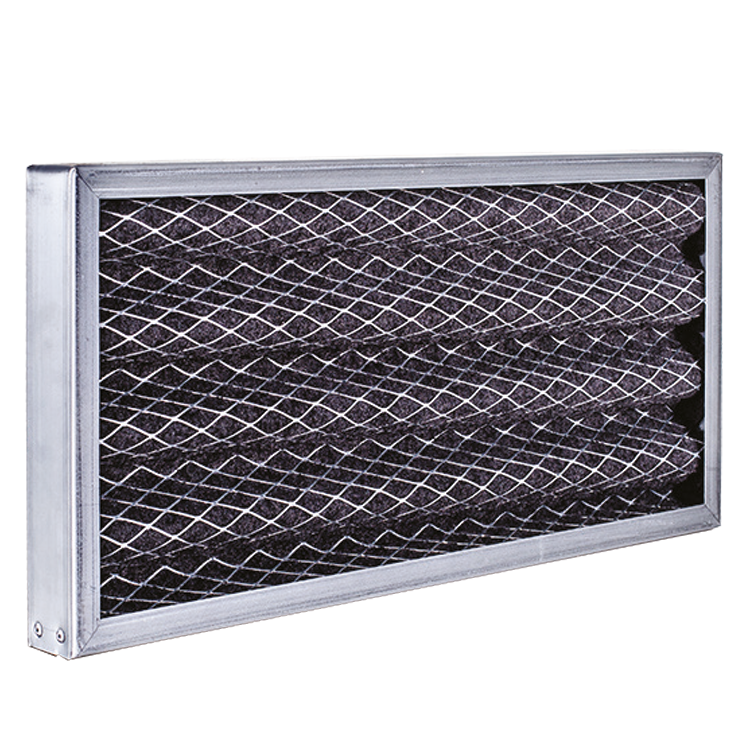
Carbon filters, also known as activated carbon filters, are designed to remove gases, odors, fumes, and volatile organic compounds (VOCs) from the air.
Unlike HEPA filters, carbon filters do not primarily capture solid particles. Instead, they absorb airborne chemicals and odor molecules through a process called adsorption.
Contaminants Removed by Carbon Filters
- Bad odors
- Chemical fumes
- Smoke smells
- Volatile organic compounds (VOCs)
- Industrial gases
- Cooking odors
Main Difference Between HEPA and Carbon Filters
The biggest difference lies in the type of contaminants they remove.
HEPA Filters Focus On:
- Solid airborne particles
- Microscopic contaminants
- Dust and allergens
Carbon Filters Focus On:
- Odors
- Chemical gases
- Smoke and fumes
- Airborne chemicals
In many advanced air purification systems, both technologies are combined to provide complete air cleaning performance.
How HEPA Filters Work
HEPA filters use a dense fiber structure to trap particles as air passes through the filter media.
Filtration Mechanisms Include
- Interception
- Impaction
- Diffusion
This multilayer filtration process enables HEPA filters to capture extremely small airborne particles efficiently.
How Carbon Filters Work
Activated carbon filters use porous carbon materials with a large surface area.
As polluted air passes through the filter, gas molecules become trapped on the carbon surface through adsorption.
Why Activated Carbon Is Effective
- Large microscopic surface area
- Strong odor absorption capability
- Chemical vapor removal
- VOC reduction
When Should You Use a HEPA Filter?
HEPA filters are ideal when airborne particles are the primary concern.
Best Applications for HEPA Filters
- Hospitals and healthcare facilities
- Allergy-sensitive environments
- Cleanrooms and laboratories
- Dust-heavy industrial areas
- Residential air purifiers
HEPA filters are especially effective for improving respiratory health and reducing allergen exposure.
When Should You Use a Carbon Filter?
Carbon filters are better suited for environments where odors, gases, or chemical pollutants are the main issue.
Best Applications for Carbon Filters
- Kitchens and cooking areas
- Industrial production facilities
- Smoking environments
- Chemical processing areas
- Commercial buildings with odor problems
Can HEPA and Carbon Filters Be Used Together?
Yes. In fact, combining HEPA and activated carbon filtration is one of the most effective air purification strategies.
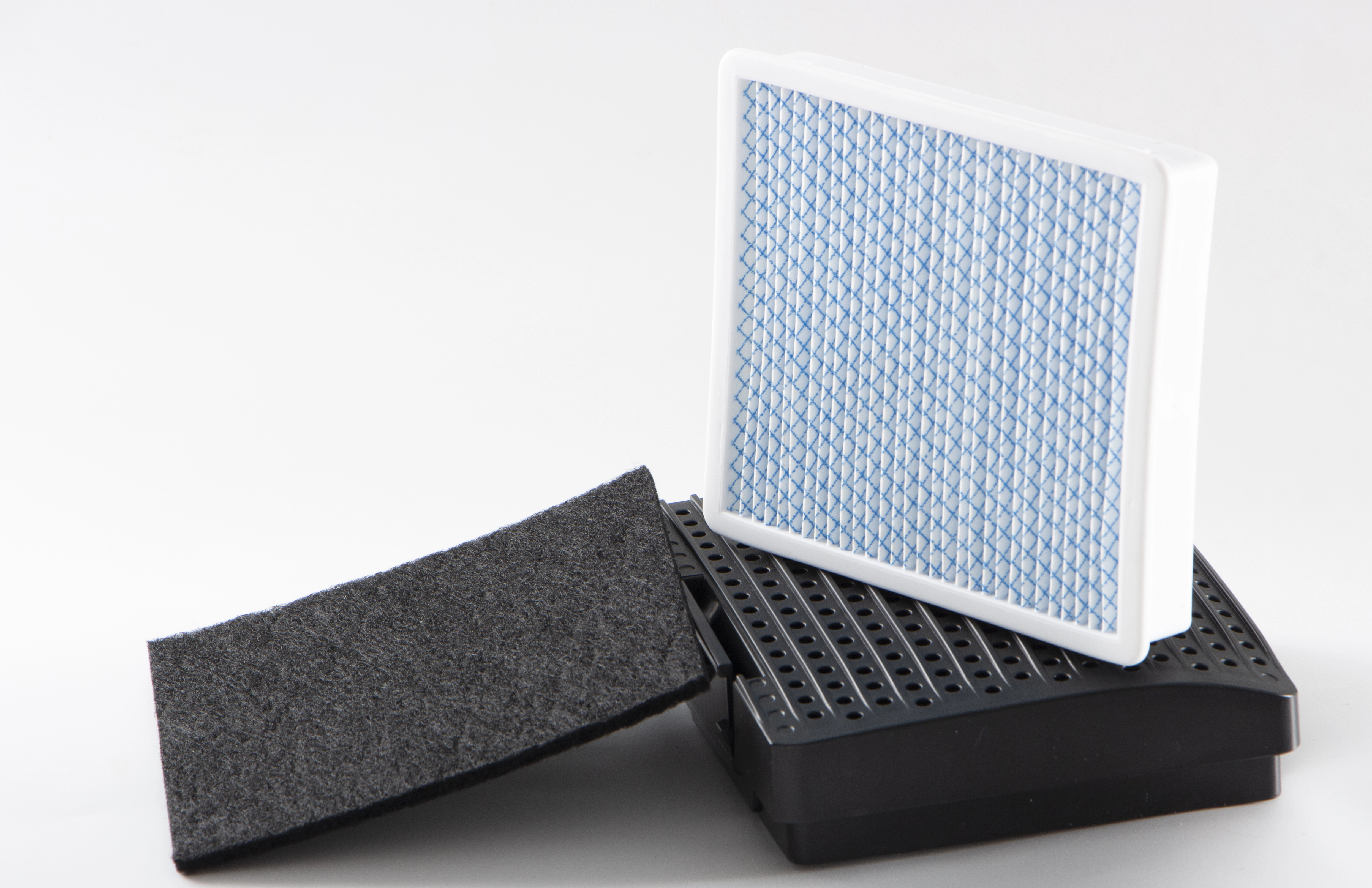
HEPA filters remove solid particles, while carbon filters eliminate odors and gases. Together, they provide a more complete indoor air quality solution.
Benefits of Combined Filtration Systems
- Cleaner indoor air
- Reduced allergens and dust
- Odor elimination
- Chemical pollutant reduction
- Improved overall air freshness
Advantages of HEPA Filters
- Excellent particle filtration efficiency
- Highly effective for allergy control
- Supports cleaner indoor environments
- Widely used in healthcare and cleanrooms
- Improves respiratory comfort
Advantages of Carbon Filters
- Strong odor removal capability
- Effective gas absorption
- VOC reduction support
- Improves indoor freshness
- Useful in industrial and commercial settings
Choosing the Right Air Filtration Solution
Selecting between a HEPA filter and a carbon filter depends entirely on the type of air pollution you want to control.
If your priority is removing dust, allergens, and microscopic particles, a HEPA filter is the ideal solution. If odors, gases, and chemical fumes are your concern, activated carbon filtration will provide better results.
For maximum indoor air quality, many modern systems combine both filtration technologies together.
Explore professional HEPA filtration products here:
https://safeairfiltre.com/en/hepa-filters
Contact
If you need expert guidance for choosing the right filtration system for your facility or project, contact the professional team here:
https://safeairfiltre.com/en/contact
Is HEPA Filter Washable With Water